


Earlier this year, Alice Donahue Investigations officially turned one year old!
Earlier this year, Alice Donahue Investigations officially turned one year old!
It’s true what they say: the first year of starting a business is the most difficult. I’ve learned how to be a manager, a businesswoman, and a lawyer all at once, while also juggling administrative tasks, accounting, personnel issues, and corporate compliance. As a solo entrepreneur you handle all operations, and you’re responsible for everything.
While this year has been challenging, it has also been incredibly rewarding. I’ve handled some of the most complex cases of my career so far, including matters with high stakes and litigious parties, high-profile sociopolitical disputes, and allegations with criminal implications. Some of these matters have been exceptionally complicated and I’ve had to consider scenarios that I’ve never encountered before. But they’ve also been fulfilling and fascinating and have reminded me of why I love doing this kind of work.
For today’s post, I wanted to share some of what I’ve been up to this past year, and review some highlights from the past year’s blog posts (after a long hiatus of being too busy to publish anything).
California Lawyers’ Association Legal London
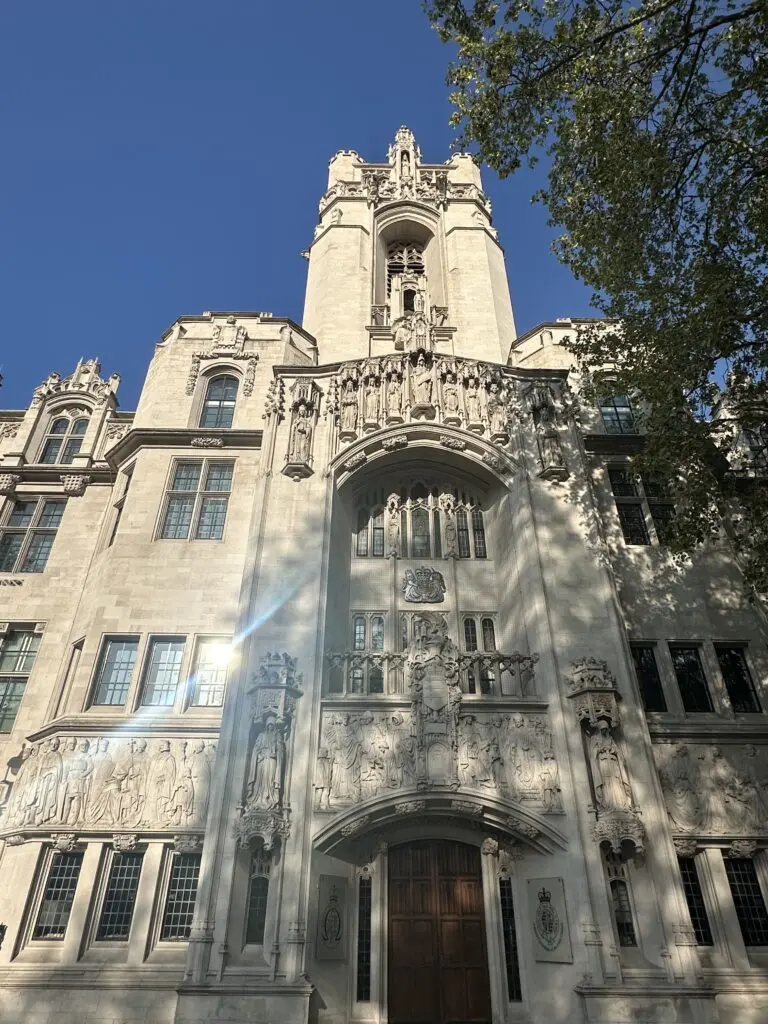
In April of this year, I was fortunate enough to participate in the California Lawyers’ Association’s Legal London program, a one week program in London in which California lawyers mingle with one another, learn about the English legal system, observe court proceedings, and talk to English barristers and judges (including the President of the Supreme Court of the United Kingdom, who we met at the Supreme Court of the United Kingdom in London, pictured in the top left of this post). The program was exceptional.
When I returned from the program, many of my friends understood why it would be fun and enriching to attend such a program (and receive MCLE credits), but they wondered what the professional angle was. Aside from being able to meet and connect with other interesting California lawyers, I was also drawn to the international, comparative aspect of the program. While most of my investigations are confined to the U.S. (and California), it is not entirely unusual to have cases that span across other states or even other countries, especially when working with large corporations. In these cases, the investigator would need at least a cursory familiarity with the laws and customs in those other countries.
As I’ve written about in other areas of my blog, I also believe that this type of interdisciplinary, and comparative enrichment is vital for workplace investigators. Because so much of our jobs require us to understand the perspectives of other, myriad individuals; to sometimes immerse ourselves in industries or workplace cultures that our entirely foreign to us; and to remain neutral and open to all perspectives, we must be adept at this type of cognitive flexibility and adaptability, skills that I believe are enhanced through activities such as consuming literature (as I’ve argued through my blog) and traveling abroad.
While in London, I was especially taken by the way that the concept of neutrality factors into their legal proceedings. As anyone familiar with workplace investigations already knows, the primary tenant of our work is neutrality, as we are expected to gather and assess information and make findings of fact in an entirely impartial manner, treating all parties equally.
When I was a law student, I took a legal ethics course where we learned that internationally, there are two main types of legal systems: the adversarial system, where the understanding is that if both sides advocate zealously for their clients, ultimately, justice will prevail; and the investigatory system, where the courts work more collectively to uncover the truth and obtain justice. Of course, the American system is adversarial, and an attorney’s primary ethical obligation is to their client: to advocate zealously for their client.
In England, while their system is also technically an adversarial one, I learned that it is also much less adversarial than the American system, and they operate with a greater degree of “investigatory” neutrality. As one English judge explained to me at a dinner the final night, English barristers’ primary ethical duty is to the courts, not to their client. This means that although a barrister advocates on behalf of their client, in an adversarial manner, their ultimate duty is to the court: to not mislead the court, and to assist the court in obtaining truth and justice. As we observed directly while sitting in on some trial proceedings, this results in a form of argumentation and questioning that is much milder and congenial than what we might see in the U.S.
This duty to the courts is also further strengthened by the division between a barrister’s role and a solicitor’s role. A solicitor is an attorney who works directly with the client, providing advice and counsel, and performing other administrative legal work, while a barrister is an attorney who appears in court. Solicitors hire barristers when their client needs to appear in court. Thus, although a barrister argues on behalf of their (and the solicitor’s) client in court, the solicitor functions as an intermediary between the two, thereby preserving some of the barrister’s neutrality, as the barrister is ultimately an officer of the court with a primary duty to the court. In other words, the barrister is more removed from their client, and is less likely to be deeply impacted or swayed by their client’s interests.
This concept is even further emphasized by the famous wigs worn by barristers and judges (but not solicitors). Admittedly, before going to London, I thought the wigs were simply relics of the past that no longer had any true purpose aside from preserving a cultural tradition. After spending time in London, though, I learned that there are many advantages to wearing these wigs.
First, it provides a degree of anonymity for those wearing them. I was surprised to see during one court proceeding that I could hardly recognize the judge that we had spoken to earlier once she reemerged in her wig. Indeed, even the Chief Justice of the Supreme Court told us that he rides the “tube” to and from work every day, and that he is hardly recognized in public. Even after handing down decisions in especially polemic or controversial cases, he has not had concerns about his safety using public transportation, as most people would not even be able to recognize him without his wig.
Aside from obscuring the identities of judges and barristers (to an extent) and protecting their safety, the wigs also provide a degree of uniformity, that, I would imagine, enhances their neutrality. When wearing their wigs, judges and barristers are no longer private individuals, they are officers of the court.
Literature and the Law Book Blog
Although American judges and investigators do not wear wigs, I often find that I am donning my “hat” of neutrality when conducting an investigation. People often ask about (and try to challenge) the neutrality of the investigator by pointing to that investigator’s personal identity, politics, beliefs, etc. I’ve even wondered about this when I first started my blog: might people try to argue that because I’m writing about topics that interest me, and communicating personal my values and interests in the process, I’m somehow less neutral in my investigations?
What these arguments fail to understand, however, is that neutrality is not an inherent trait, it is a professional skill. No investigator can be inherently neutral, since all investigators are people, and people have lived experiences, worldviews, values, and other traits that create a subjective view of the world. Neutrality is a professional skill: a set of practices and procedures that force a generally uniform approach, and train the mind to evaluate the evidence holistically and objectively. I view neutrality as an intellectual, professional pursuit, and that concept will always be at the core of my work.
Since starting my solo practice about a year and a half ago, my case work has increased significantly, and I’ve gotten much busier. Although my initial goal was to keep up with my book blog, posting twice per month, it’s now been many months since I last posted something. When I first started my blog, I was flooded with ideas for different themes I could cover, and had a lot of fun researching books and coming up with ideas for comparison and analysis. Reading the books, analyzing them, and writing the posts, however, is proving to be quite time-consuming.
I wanted to take some time in today’s post to review some of the highlights from my prior posts, and reactivate the book blog flow (which I’m hoping to be able to stick with in coming months).
I started the book blog with an Introduction, explaining some of my goals for the blog, my philosophies on the intersection of literature and law, and the general importance of literature in our lives. As mentioned above, I believe that a good investigator maintains an agile and open mind, which can be achieved through the consumption of literature and other interdisciplinary texts.
I then reviewed a book on implicit bias in two separate posts (On Implicit Bias: Part I and On Implicit Bias: Part II), and the ways in which implicit bias creeps up in workplace investigations. In those posts, I talked about how knowledge of implicit bias can help us assess the “reasonableness” of a complaint or a complainant’s perception of bias; probe these allegations more affectively; and reduce our own implicit biases in the pursuit of investigator neutrality. I then reviewed four different books in two posts – one on Microaggressions in the Workplace and one on Claudia Rankine and the Power of Art – showing ways in which implicit bias can manifest in workplace (and other) settings.
I then wrote a post On Gossip and Hearsay, where I discussed (among other things) the use of gossip and “hearsay” evidence in investigations. This post helped segue into my larger theme on the global #metoo movement, and how this movement impacted sexual harassment laws (and workplace investigations) in the U.S. and abroad. So far, I’ve written about the #metoo movement in the U.S. (particularly in California), Brazil, Tunisia, Egypt, China, Sweden, Nigeria, Pakistan, England and Japan.
The topic of #metoo movements across the globe, and the seminal works of fiction and non-fiction that have accompanied these movements has been fascinating to me, and I had a lot of fun researching different texts from different countries. It was also fascinating to see that in many countries, novels, memoirs or pieces of investigative journalism were foundational to and symbolic of the movement, again showing the power of literature and storytelling.
In upcoming posts, I will continue with this theme of the global #metoo movement, since I now have a surplus of ideas and texts from around the world on this topic. As fascinating as I find this topic, I may also try to weave in some other posts on some other topics so that the topic doesn’t become too redundant or monotonous. Most of all, though, I will try to simply stay on top of this writing! While my case work will always take priority, blog writing has been an enjoyable creative outlet for me, and it has allowed me to think of my work more dynamically.
Thanks for reading!
Share this article: